| Rosenberg Plumbing & Air
p>Winter tends to be the season that keeps people indoors the most. With all that time inside, people suffer from the effects of stale air. That might not seem like a big deal, but poor indoor air quality (IAQ) during the winter can promote problems ranging from dry skin to respiratory diseases. It is important to know why these issues appear and how to improve indoor air quality over the winter.
What Makes Indoor Air Quality Bad During the Winter?
As winter sets in and temperatures drop, people tend to close their houses up to improve efficiency. With few open windows and generally less ventilation, your house undergoes fewer exchanges of fresh air with the outdoors. From an efficiency perspective, this is a good thing because it minimizes heating energy losses. However, it also traps lots of contaminants indoors.
There are many potential irritants inside your home, too. Building materials like wood emit volatile organic compounds. Similar chemicals leach from carpeting, furniture, and even many cooking implements.
There are also plenty of biological irritants that accumulate during the winter. Dust mites, pet dander, and mold all accumulate more as there are fewer air exchanges. Viruses and bacteria build up indoors, particularly because there is less UV light from the sun during shorter months to kill pathogens.
Even just being indoors with the air you’ve exhaled creates problems. The carbon dioxide that we all exhale builds up indoors. High carbon dioxide levels can reduce cognition, leading to what people often call brain fog. A 5-15% decline in performance on mental tests is common with exposure to high indoor CO2 levels.
Likewise, CO2 buildup is a general proxy for all other things that accumulate in a house’s air. Consequently, HVAC technicians often use CO2 monitors as a way to broadly judge how poor a home’s indoor air quality is.
People With Health Issues
Everyone can benefit from improved indoor air quality. However, folks who have health issues are typically the ones who benefit the most from improving air quality. Individuals diagnosed with conditions like allergies, asthma, or COPD can suffer respiratory episodes because of exposure to poor indoor air.
Notably, you might experience issues you assume are more related to the winter airborne disease season than your home’s air. People often suffer from nose bleeds, coughing, or chronically sore throats because their home’s indoor air quality is just very poor. If you particularly seem to breathe better when you get away from your house in the winter, you should consider whether IAQ is the problem.
Energy Efficiency and Poor IAQ
The modern emphasis on energy efficiency hurts indoor air quality. Modern homes have tighter building envelopes, meaning they simply don’t leak as much as they used to. With less fresh air sneaking into your home, you have to find other ways to keep your place’s air healthy.
Attacking Indoor Air Quality in Several Ways
The simplest way to address indoor air quality in a house is filtration. Most homes’ HVAC systems already have simple filters to keep things like pet hair and dust bunnies from getting into the equipment. However, this only addresses the biggest contaminants. To really deal with IAQ problems, it helps to attack the problem in several ways.
HEPA Filters
One of the most commonly discussed IAQ solutions is the use of high-efficiency particulate air (HEPA) filters. HEPA filters are essentially much better at trapping smaller contaminants in the air than the standard filters on your HVAC. For example, hospitals almost universally use HEPA filtration. HEPA filters capture most allergens and many biological irritants.
Activated Carbon Filtration
Activated carbon offers another layer of defense. The big thing with this approach is that activated carbon reacts with a lot of chemicals in the air. As the air floats past the filter, the carbon neutralizes the molecules that cause smells. It can neutralize some chemicals in the air, too.
UV-C Light
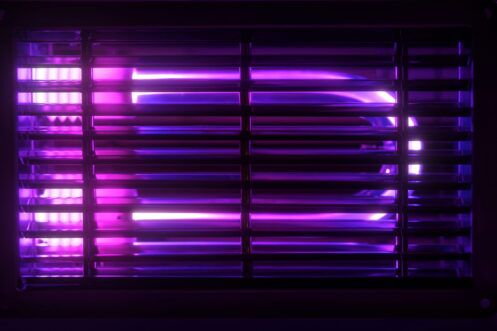
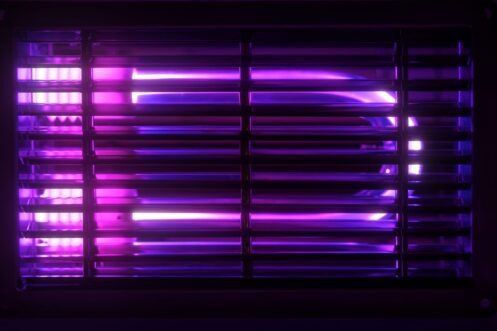
UV-C rays are the same things that give sunlight its antiseptic qualities. The abundance of UV light during the summer is one of the reasons that most respiratory diseases appear to take the warmer months off. UV-C light destroys the DNA and RNA that allow bacteria and viruses to reproduce. This reduces transmission because pathogens can’t achieve the numbers they need to overwhelm a host’s immune system.
The good news is that HVAC technology allows us to put UV light to work during the winter. By adding a UV light chamber to an HVAC, typically along the cold-air return, you can eliminate more than 99% of pathogens within 24 hours.
Improved Ventilation
Improved ventilation is a good way to improve indoor air quality. The good news is that the trade-off between IAQ and energy efficiency isn’t as painful as it once was. Energy- and heat-recovery ventilation systems allow efficient systems to recover more warm air from your HVAC’s exhaust system. ERV and HRV units use a heat exchanger to pass the warmth to incoming air.
Not only does this allow you to circulate more fresh air, it also improves your heating system’s overall efficiency. It accomplishes this because even slightly warming the inbound air means your heater doesn’t have to work as hard to bring it up to temperature.
HVAC Maintenance
Energy efficiency feels like the villain in a lot of this conversation. However, an inefficient HVAC, especially a poorly maintained one, can worsen indoor air quality. If the HVAC isn’t creating enough pressure to circulate air well throughout your house, that can reduce air exchanges and lead to pockets of especially poor air.
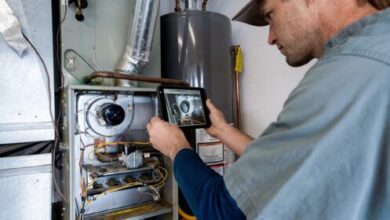
Annual HVAC maintenance is necessary to keep today’s efficient systems working well enough not to adversely affect IAQ. Our technicians can test your HVAC’s systems to see if they’re working as well as possible. Especially when it comes to features like dampers, blower motors, and fans, regular maintenance does a lot to improve indoor air quality.
Filter Replacement
Keeping up with filter replacements makes a huge difference, too. The basic fiberglass filters on your furnace can collect a lot of stuff. The industry standard is to replace the main filter every three months. However, households that have pets or smokers should consider monthly replacements. Also, you may want to perform more frequent filter replacements if someone in your household has a respiratory health problem.
Generally, filters downstream of the main filter require less frequent replacements. For example, you can typically replace a HEPA filter every 6-12 months. Bulbs for UV light filtration usually require a once-a-year replacement. Activated charcoal filters tend to be fairly cheap, so many people replace them at the same time as the main filter.
Rosenberg Plumbing & Air works on a wide range of heating and AC systems, including furnaces, ductless mini-splits, and heat pumps. We are happy to install, repair, upgrade, or maintain HVACs. Our company has served the people of San Antonio, TX and the surrounding areas for more than three decades. Our award-winning operation also has an A+ BBB rating. Likewise, we employ NATE-certified technicians and are licensed and insured.
If you’re worried about indoor air quality this winter in your San Antonio residence, contact Rosenberg Plumbing & Air today to learn about the many available solutions.
Tags: Air Quality