7 Proven Ways to Fix a Broken Water Heater in Flower Mound, TX
When your water heater breaks down, it can disrupt your daily routine. You might wonder what’s gone wrong and how to fix it efficiently. Fortunately, there are seven effective methods you can try right in Flower Mound, TX. From checking the power supply to inspecting key components, each step can help identify the issue. Let’s investigate these methods to get your water heater back in working order.
Check the Power Supply and Circuit Breaker
Before diving into more complex repairs, it’s essential to check the power supply and circuit breaker of your water heater.
First, verify the unit is plugged in properly; a loose connection can cause power issues. Next, locate your circuit breaker panel and inspect the breakers. If you see a tripped breaker, flip it back to the “on” position. If it trips again, there might be an underlying electrical problem that requires professional help.
Also, check for any blown fuses, especially if your water heater uses fuses instead of breakers. Replace any blown fuses and test the system again.
If the heater still doesn’t work, consider that the issue may be more complex, requiring expert attention. Remember, guaranteeing a solid power supply is the first step in diagnosing your water heater’s problems. Regular maintenance can help prevent issues related to aging equipment.
Inspect the Thermostat Settings
Before you proceed with any repairs, check your water heater’s thermostat settings.
Make sure the temperature is set correctly, and verify that the power supply is stable.
Additionally, inspect the wiring connections to guarantee everything’s secure and functioning properly.
If the thermostat appears to be malfunctioning, it may be time to consider professional replacement services for your water heater.
Check Temperature Setting
One of the first steps in troubleshooting a broken water heater is to check the temperature settings on your thermostat.
Make sure it’s set to the right temperature, typically around 120°F for ideal performance and safety. If it’s set too low, you mightn’t get enough hot water; too high, and you risk scalding and energy waste.
Adjust the setting if necessary, and wait a bit to see if the water temperature improves. If it doesn’t, you may need to take into account other issues, like a faulty thermostat.
Regularly checking your water heater’s temperature can help maintain efficiency and prolong its lifespan, ensuring you always have hot water when you need it.
Verify Power Supply
Checking the power supply to your water heater is critical for diagnosing any issues.
Start by inspecting the thermostat settings to verify everything’s configured correctly. Sometimes, a simple adjustment can make all the difference.
Here are a few things to check:
- Make sure the thermostat is set to the desired temperature.
- Verify that the circuit breaker hasn’t tripped.
- Check for blown fuses in your electrical panel.
- Confirm the water heater’s power switch is in the “on” position.
- Look for any signs of malfunctioning components or wiring problems.
If everything seems in order, yet your water heater still isn’t functioning, it might be time to call a professional for further assistance.
Inspect Wiring Connections
Inspecting the wiring connections of your water heater is essential for ensuring it operates efficiently. Start by turning off the power to the unit to prevent any accidents.
Once it’s safe, remove the access panel to reach the wiring. Check for loose or corroded connections, as these can lead to performance issues or even safety hazards. Tighten any loose wires and replace any frayed or damaged ones.
Pay special attention to the thermostat wiring; it should be securely attached and free of any debris. After making the necessary adjustments, reattach the access panel, restore power, and test your water heater.
If problems persist, it may be time to call a professional for further assistance.
Examine the Heating Elements
When diagnosing a broken water heater, examining the heating elements is crucial. These elements are responsible for heating the water, and if they’re faulty, you’ll end up with lukewarm or cold water.
Here’s how to check them:
- Turn off the power to the water heater to prevent any accidents.
- Remove the access panels on the heater to expose the heating elements.
- Inspect for damage or corrosion, which can indicate that they need replacement.
- Test the elements using a multimeter to check for continuity; a lack of continuity means they’re bad.
- Look for leaks around the elements, as this can additionally affect their performance.
If you find issues, it’s often best to call a professional like Triple A Air Conditioning to guarantee proper installation and safety. They can provide reliable service and peace of mind for your water heater repairs!
Flush the Tank to Remove Sediment
Flushing the tank of your water heater is an essential step to maintain its efficiency and prolong its lifespan. Over time, sediment builds up at the bottom of the tank, reducing heating efficiency and potentially damaging the unit.
To start, turn off the power supply and water supply to your water heater. Then, attach a garden hose to the drain valve at the bottom of the tank, placing the other end in a drain or outside.
Open the drain valve slowly, allowing the water to flow out. You might want to flush the tank with cold water by briefly turning on the water supply. This process will help dislodge any stubborn sediment.
Once the water runs clear, close the drain valve, remove the hose, and refill the tank. Remember to restore the power and water supply. Regularly flushing your tank can prevent costly repairs and guarantee your water heater works efficiently. Additionally, performing annual maintenance improves overall efficiency by maintaining components.
Check the Pressure Relief Valve
The pressure relief valve is a crucial safety feature of your water heater, preventing excessive pressure buildup that could lead to leaks or even explosions.
To verify it’s working correctly, follow these steps:
- Locate the valve: It’s usually found on the top or side of your water heater.
- Check for leaks: Inspect around the valve for any signs of water.
- Test the valve: Lift the lever gently to release some water; it should flow smoothly.
- Listen for sounds: If you hear hissing or see steam, your valve might need replacement.
- Consult a professional: If you’re unsure about the valve’s condition, don’t hesitate to call an expert.
Regularly checking the pressure relief valve can save you from costly repairs and guarantee your water heater operates safely.
If you notice any issues, reach out to a trusted professional for assistance.
Look for Leaks and Corrosion
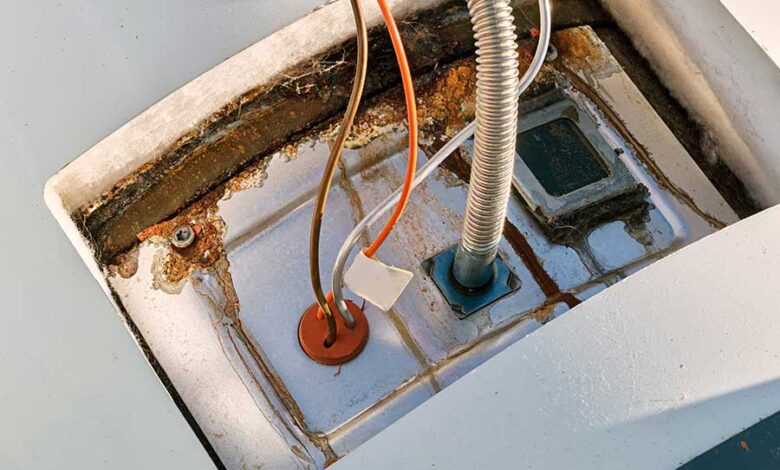
While inspecting your water heater, it’s vital to look for leaks and signs of corrosion, as these issues can lead to significant damage if left unaddressed.
Start by checking the tank and surrounding pipes for any moisture or water pooling. Even small leaks can worsen over time, resulting in costly repairs.
Next, examine the tank’s exterior and connections for any rust or corrosion. If you spot any discoloration or flaking, it’s a clear indicator that your water heater may be compromised.
Don’t overlook the area around the pressure relief valve, as moisture can accumulate here, too.
Addressing these problems early on can save you time and money in the long run. If you find leaks or corrosion, it’s necessary to take action immediately to prevent further damage.
Keeping your water heater in peak condition starts with a thorough inspection for these significant issues.
Call a Professional for Repairs
When you notice issues with your water heater, calling a professional for repairs is crucial. Tackling this problem on your own can lead to more damage or safety hazards.
A qualified technician can efficiently diagnose the issue and provide the right solutions. Here are some reasons to call in the experts:
- They have the training and experience to handle complex repairs.
- Professionals can quickly identify underlying problems that you might miss.
- They use specialized tools to guarantee safe and effective repairs.
- Licensed technicians know local codes and regulations for compliance.
- You’re protected by warranties and guarantees on their work.

Conclusion
In Flower Mound, TX, fixing your broken water heater doesn’t have to feel like searching for a needle in a haystack. By following these seven proven methods, you can tackle the issue with confidence. Whether it’s checking the power supply or calling in a pro, you’re equipped to restore hot water to your home. Remember, regular maintenance is key to keeping things running smoothly, just like oil keeps a well-oiled machine functioning efficiently. Don’t let a cold shower get you down!