The top reasons vans fail their MOT
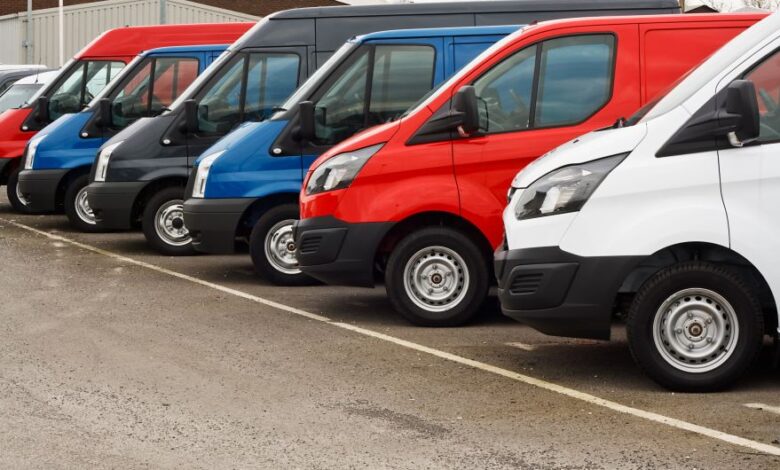
If you drive a van, you already know it works harder than the average car. Long days, heavy loads, endless miles. So, when MOT time rolls around, the stakes feel higher – and the data backs that up. Vans fail their MOT more often than cars, and for very different reasons.
A couple of months ago, we explored which van models are most likely to fail their MOT. Now we’re looking at the why – the faults most likely to cause a fail, how often they happen, and what this says about how long vans really last on the road.
The 25 most common van MOT fail reasons
According to DVSA vehicle history data, these are the faults most likely to bring a van to a halt come MOT time. The numbers show just how often these issues crop up:
| Rank | Fail Reason | Number of Fails |
| 1 | Handbrake efficiency below requirements (3.7.B.7) | 6,445,966 |
| 2 | Handbrake efficiency below requirements (1.4.2 (a) (i)) | 3,206,260 |
| 3 | Nearside Registration plate lamp not working (1.1.C.1d) | 2,704,739 |
| 4 | Offside Registration plate lamp not working (1.1.C.1d) | 2,577,212 |
| 5 | Nearside Windscreen wiper does not clear the windscreen effectively (8.2.2) | 2,468,859 |
| 6 | Offside Windscreen wiper does not clear the windscreen effectively (8.2.2) | 2,396,945 |
| 7 | Offside Front Tyre tread depth below requirements of 1.6mm (4.1.E.1) | 2,373,803 |
| 8 | Windscreen washer provides insufficient washer liquid (8.2.3) | 2,253,081 |
| 9 | Nearside Front position lamp(s) not working (1.1.A.3b) | 2,210,491 |
| 10 | Nearside Front Tyre tread depth below requirements of 1.6mm (4.1.E.1) | 2,177,809 |
| 11 | Nearside Rear Suspension spring mounting prescribed area is excessively corroded (2.4.A.3) | 2,022,118 |
| 12 | Service brake efficiency below requirements (3.7.B.7) | 1,944,334 |
| 13 | Offside Front position lamp(s) not working (1.1.A.3b) | 1,921,198 |
| 14 | Offside Rear Suspension spring mounting prescribed area is excessively corroded (2.4.A.3) | 1,883,098 |
| 15 | Nearside Stop lamp not working (1.2.1b) | 1,841,696 |
| 16 | Offside Stop lamp not working (1.2.1b) | 1,744,961 |
| 17 | Registration plate lamp not working (1.1.C.1d) | 1,729,689 |
| 18 | Offside Front Brake pipe excessively corroded (3.6.B.2c) | 1,368,179 |
| 19 | Offside Rear fog lamp not working (1.3.2b) | 1,285,069 |
| 20 | Brakes imbalanced across an axle (3.7.B.5b) | 1,279,639 |
| 21 | Engine MIL inoperative or indicates a malfunction (8.2.2.2 (g)) | 712,588 |
| 22 | Offside Rear Coil spring fractured or broken (5.3.1 (b) (i)) | 557,100 |
| 23 | Handbrake efficiency less than 50% of the required value (1.4.2 (a) (ii)) | 490,686 |
| 24 | Horn not working (1.6.2a) | 462,678 |
| 25 | Nearside Track rod end ball joint has excessive play (2.2.B.1f) | 458,480 |
The top failure reasons explained
Handbrake efficiency
This isn’t just the top reason vans fail – it’s miles ahead of every other fault.
Vans carry heavier loads, park on more varied terrain, and often spend long hours stop‑starting in traffic. All that strain puts extra pressure on the handbrake mechanism. And because handbrake wear is gradual, many drivers don’t notice a problem until MOT day.
Interestingly, handbrake issues are also the most common cause of MOT failure in cars – but the scale is far higher in vans.
Registration plate lamps
Cars rarely fail for a number plate bulb. But vans? They fail for it a lot. Why?
Because vans take more knocks. Rear doors slam harder. Loads shift. Bulbs rattle loose. And because registration lamps sit low on many vans, they’re more exposed to dirt, salt, and water – all things that ruin wiring.
A blown plate bulb sounds small, but it’s a legal requirement and can carry a fine of up to £1,000 if the plate isn’t properly lit.
Windscreen wipers and washers
Vans do long motorway miles, early starts, late finishes, and plenty of winter driving. Wipers take a beating. And while a smeary windscreen might feel like a minor annoyance, it’s an instant MOT fail.
Washers failing because they’re empty is surprisingly common too – something easily fixed before the test.
How long do vans last before their first MOT failure?
Using DVSA data for van models manufactured for more than 5 years (and with 5,000+ recorded tests), we can see how long different makes last before failing their MOT for the first time. And there’s a clear winner; many VW vans go over 15 years before their first recorded fail.
| Rank | Make | Average Age at First MOT Fail |
| 1 | Volkswagen | 15 years 7 months |
| 2 | Toyota | 11 years 9 months |
| 3 | Fiat | 11 years 3 months |
| 4 | Suzuki | 11 years |
| 5 | Renault | 10 years 11 months |
| 6 | Peugeot | 10 years 8 months |
| 7 | Daihatsu | 10 years 6 months |
| 8 | IVECO | 10 years 6 months |
| 9 | Ford | 10 years 3 months |
| 10 | Vauxhall | 10 years 3 months |
| 11 | LDV | 10 years |
| 12 | Mercedes-Benz | 10 years |
| 13 | Citroen | 9 years 6 months |
| 14 | Nissan | 9 years 2 months |
| 15 | Mitsubishi | 9 years 2 months |
| 16 | MAN | 3 years |
Why vans wear down faster than cars
Vans aren’t just used differently – they’re used harder. Here’s what accelerates wear:
1. Long mileage days
Many vans clock more miles in a year than some cars manage in five. More miles = more mechanical wear.
2. Heavy loads
Most cars aren’t expected to haul tools, equipment, parcels or stock daily. But many vans do just this! Suspension, brakes, handbrakes and tyres all take the hit.
3. Stop‑start driving
Deliveries, site visits, urban routes. Nothing wears brakes out faster.
4. Working environments
Vans face tougher conditions:
- construction sites
- muddy tracks
- coastal routes
- winter grit
- pothole-heavy rural lanes
All of it accelerates corrosion and mechanical strain.
5. Drivers rotate – usage doesn’t
Fleet vans especially may have multiple drivers. That means driving styles vary wildly, which affects wear.
All together, it paints a clear picture: vans work harder, and their MOT failures reflect it.
Keep your van working – and your business moving
Talk to us today and let’s keep you, your van, and your business moving.
Sources: MoneySuperMarket, DVSA
You could also read:
This is a marketing blog by Howden.